
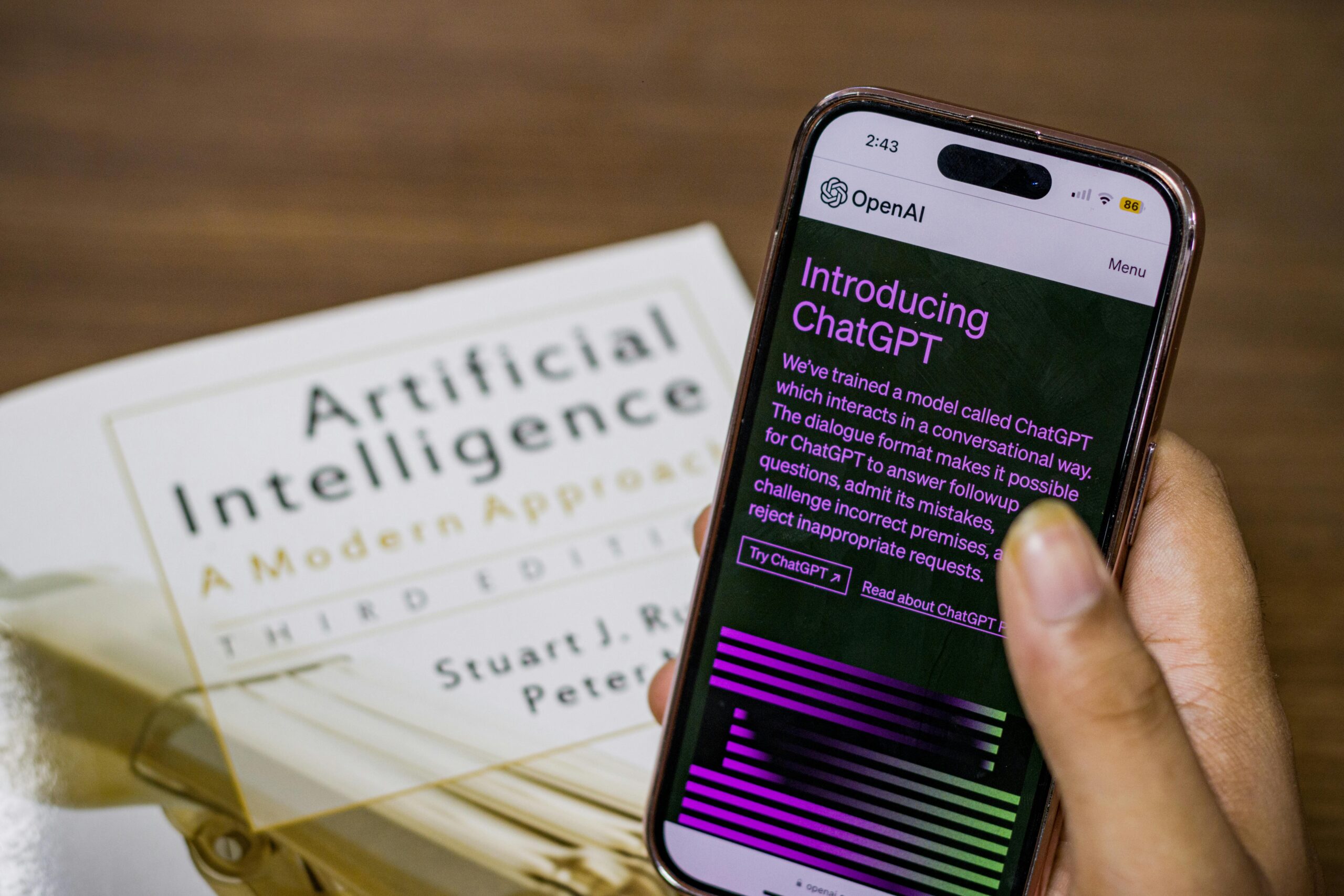
It motivates you, boosts your self-confidence, and encourages you in all your creative ideas… It even goes so far as to give you psychological advice, guide you in your life choices, or help you change your mind. No, it is not your friend, but we are talking about Chat GPT.
Chat GPT has been designed to adopt a friendly and comforting tone, rarely contradicting you and only telling you off if you beg it to.
Many people still fall into the trap. Many give it their personal data. But have you ever wondered who is behind this algorithm that constantly analyses everything to collect all the information about you?
The Parisian psychologist Olivier Duris points out that the risk of confiding in artificial intelligence is that it is programmed to please and therefore to flatter users. While it may give the impression of producing a sensible, almost human response, its answer is in fact a simple statistical analysis of the large amounts of textual data it receives.
The dangers and pitfalls of artificial intelligence
The explosion of artificial intelligence has alarmed many psychologists, particularly after a number of tragic incidents this year.
In the United States, several complaints have been filed against Open AI for inciting suicide among young people. Conversations between a 16-year-old American teenager and Chat GPT have been found, revealing the extent to which AI encouraged this young person to take their own life.
France Info recently revealed that a third of teenagers aged 13 to 17 have already confided in Chat GPT.
Relying on AI instead of turning to friends and family or real psychologists
The risk with these new practices, which are already well established among young people, is that they replace real conversations with loved ones with robotic discussions that not only cause us to withdraw into ourselves, but also alienate us by preventing us from confronting real reflections or questions.
At Stanford University and Carnegie Mellon University, computer scientists studied different machine learning models (11 in total) and found that all of them provided the answer the user wanted to hear. Thus, AI reinforces their choices and makes them less able to resolve conflicts.
This is what they highlighted in their article “Sycophantic AI Decreases Prosocial Intentions and Promotes Dependence.” This is known as sycophancy (or “glazing”), which is base and self-serving flattery. Many young people confide in artificial intelligence because it is accessible and fast, and its responses give them the impression that they have made the right decision.
But interacting only virtually with a robot will only distance us from our loved ones and circles of friends, who could enlighten us about the choices we need to make, challenge our opinions, help us debate, and take a step back. All things that AI is incapable of doing.
Get to know AI with DSF’s courses on Artificial Intelligence
For a better understanding of AI, DSF offers courses on how to use artificial intelligence, how to evaluate its benefits and limitations in different contexts to apply it in your daily life.
One of the main 15-hour course is titled “AI Toolkits Essentials” and explores AI in its positive social and environmental impact. Through this course, learners will be able to understand AI fundamentals, key concepts, recognise ethical risks and apply a human-centred approach to responsible and inclusive AI use, for example. This course is also essential to use AI tools effectively and develop basic data and algorithmic thinking skills.
A second key course is ‘Demystifying AI for Educators’, a 10-hour course to understand artificial intelligence and its transformative educational potential. This course helps teachers to understand how to integrate AI-driven tools and strategies into their teaching practice effectively. They will also learn how to leverage AI to create more dynamic and inclusive learning environments for students.

Courses on Well-being in the 21st Century
For all these reasons, Digital Skills Factory offers these three different courses on well-being in the 21st century :
- Teacher Well-being
- Well-being at Work
- Student Well-being
These three essential courses teach participants how to manage stress, adapt to change, recognise the importance of emotional intelligence in the workplace, and understand workers’ emotions and take care of their mental health.
These courses aim to build healthy professional relationships and strike a balance between work and personal life.