
A student makes a cruel comment about a classmate. Three people laugh. Two look away. Someone repeats the joke later. Another student wants to help, but worries that getting involved could make them the next target.
At first glance, this might look like an interaction between two students: the person doing the bullying and the person being targeted. But the reactions of everyone around them are part of the situation too.
Bullying is more than a one-off disagreement. It generally involves unwanted aggressive behaviour, a real or perceived power imbalance, and behaviour that is repeated or likely to be repeated. It can be physical or verbal, but it can also play out through friendships, social groups and digital spaces.
Researchers have studied bullying as a group process for decades. What continues to matter is how the people around an incident respond: whether they reinforce the behaviour, ignore it, challenge it or support the person being targeted.
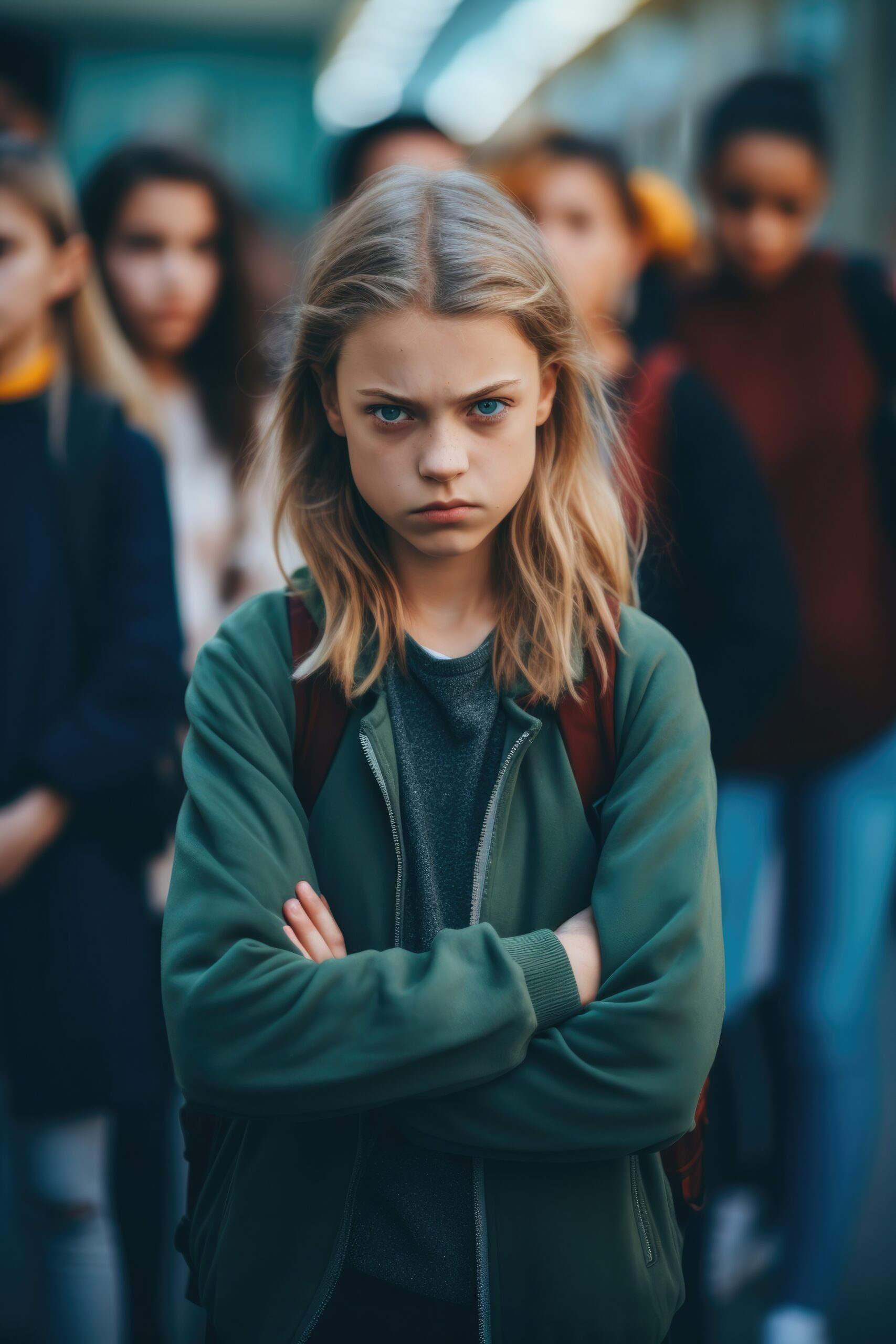
Bullying has risen again since 2022

The PISA 2025 results, released by the OECD in September 2026, provide one of the latest international snapshots of bullying among 15-year-olds.
Across OECD countries, one in five students reported experiencing at least one form of bullying a few times a month or more.
Compared with 2022, bullying increased in a large majority of education systems with comparable data. In 51 of 75 countries and economies, at least one measured form became more common while the others remained stable.
This does not mean bullying has been rising continuously. Levels had fallen in many education systems between 2018 and 2022, and the OECD average in 2025 remains somewhat lower than in 2018. But the latest figures show that some of that progress has reversed.
One of the clearest changes was in relational bullying, sometimes called social bullying. This harms someone through their relationships or social standing, for example by spreading rumours or deliberately excluding them.
PISA tracked one form of relational bullying by asking students whether others had spread nasty rumours about them. Between 2022 and 2025, this became more common in 47 countries and economies.
This type of bullying can also be harder for adults to notice. A fight in a corridor is visible. A student gradually being pushed out of a friendship group may not be.
The people watching matter too
A bystander is someone who witnesses bullying, whether in person or online.
Their reaction can influence the situation. Laughing at a humiliating joke, repeating a rumour or sharing a hurtful post can reinforce what is happening. Other students may refuse to join in, support the person being targeted or tell a trusted adult.
A 2025 study involving 38 secondary-school teachers and 1,084 adolescents in South Korea explored whether teachers could influence these responses.
Teachers in the intervention group used a more supportive and less controlling teaching approach. Students in their classrooms reported a more supportive peer environment, more behaviour that defended students experiencing bullying, and less passive or reinforcing bystander behaviour.
It is one study in one educational setting, so it should not be treated as a universal formula. But it adds to existing evidence that students’ responses to bullying are shaped partly by the environment around them.
Why might students stay silent?
Knowing that bullying is wrong does not necessarily make speaking up easy.
A student might fear becoming the next target, losing friends or being labelled a snitch. They may not know how to intervene safely, or they may doubt that telling an adult will make a difference.
Students experiencing bullying can face many of the same concerns.
So rather than only asking:
Why didn’t they tell someone?
It is worth asking:
Have we made it safe enough for them to tell us?
When bullying happens, adults need to act
Bullying should not be treated as a normal part of growing up or something students simply need to resolve themselves.
Its effects can reach beyond the incident itself. Bullying is linked with poorer emotional well-being, anxiety, depression, difficulties with relationships and learning, and a weaker sense of safety and belonging at school.

Adults should:
- intervene promptly and make sure everyone is safe;
- speak to the students involved separately rather than forcing an immediate confrontation;
- support the student being targeted while clearly addressing the harmful behaviour; and
- follow up afterwards, because bullying can continue in less visible ways or move online.
Schools should follow their own safeguarding and reporting procedures, and involve relevant support staff where necessary.
But prevention also begins before an incident happens.
Clear expectations for behaviour, trusted ways to report concerns and consistent adult responses help shape what students believe will happen when they ask for help.
PISA 2025 found that greater exposure to bullying was associated with a weaker sense of belonging at school. At school level, lower exposure was also associated with students feeling safer and with a more positive disciplinary climate.
These findings do not prove that one factor directly causes another. But they support a broader approach to prevention: creating environments where harmful behaviour is less likely to be rewarded, speaking up feels safer and students trust adults to respond.
Key takeaways
- Bullying is not only physical. It can also happen through rumours, exclusion, relationships and online behaviour.
- Recent data are concerning. One in five students across OECD countries reported experiencing bullying at least a few times a month in PISA 2025.
- Bystanders can influence what happens next. They may reinforce bullying, stay passive or help support the person being targeted.
- Students may stay silent because speaking up feels risky, not because they do not care.
- Adults have a responsibility to respond and follow through. Prevention also depends on building an environment where students feel safe asking for help.
Want to build your bullying prevention skills?
Understanding what bullying looks like is only the beginning.
DSF’s Breaking the Bullying Cycle course helps educators and school leaders understand different forms of bullying, recognise its social dynamics and consequences, respond effectively and build practical prevention strategies for their learning environments.

Breaking the Bullying Cycle – 10hrs
AUDIENCE : Educators, School Leaders
Course outcomes
- Identify the forms of bullying behaviour.
- Recognise the Social dynamics.
- Understand the Impact and Consequences of bullying.
- Develop and implement strategies of interventions.
- Create an Action plan.
Modules
- What is bullying behaviour?
- Consequences of bully behaviour
- Strategies for intervention
84 % Learners Satisfaction*
Sources:
OECD (2026).
PISA 2025 Results (Volume I): Future-Ready Students.
OECD Publishing, Paris. Published 8 September 2026.
View the PISA 2025 report
OECD (2026).
Bullying in education: Prevalence, impact and responses across countries.
OECD Education Working Papers, No. 341.
View the OECD working paper
Cheon, S. H., Reeve, J., Yoo, K-E., Song, Y-G.,
Marsh, H. W., Jang, H-R. & Lee, Y. (2025).
Bystanders tend to defend victims in a supportive classroom climate:
A cluster randomized control trial and an observational study.
Journal of School Psychology, 110, 101431.
View the study on PubMed
Centers for Disease Control and Prevention (2024).
Bullying. Youth Violence Prevention.
View CDC guidance
U.S. Department of Health and Human Services, StopBullying.gov.
Bystanders to Bullying and Respond to Bullying.
Bystanders to Bullying
Salmivalli, C., Lagerspetz, K., Björkqvist, K.,
Österman, K. & Kaukiainen, A. (1996).
Bullying as a group process: Participant roles and their
relations to social status within the group.
Aggressive Behavior, 22(1), 1–15.